Pawsitive Solutions

Dog Training Solutions

Email: enquiries@pawsitivesolutions.com

Phone: 07842 050 998

  • Home
  • Our Team
    • JOIN OUR TEAM
  • Training Programmes
    • One-to-One Behavioural Training
    • General Obedience Training
    • Puppy Package
  • Enquiries
  • Testimonials
  • Blog

DANGEROUS PET CHEW : RAWHIDE!

December 24, 2022 By

MOST DANGEROUS PET CHEW : RAWHIDE!

On our daily dog behaviour visits I often strongly recommend our clients stay clear of these ‘treats’. No-one says it better than our friends at www.planetpaws.ca – Planet Paws

See their full blog on the topic here : https://www.planetpaws.ca/2015/07/31/raw-hide-danger/

It’s well worth your time clicking on the link and reading their full blog piece on the subject.

Here are some excerpts from their piece.

“How can one of the most popular chew sticks on the planet be so dangerous for your pets, you ask? I mean, most dogs chew on rawhide for hours on end, and not only does it keep them busy, but they seem to last forever.
Well if you understood what it took to make this toxic “raw” leather stick, you would quickly understand what the problem is.”

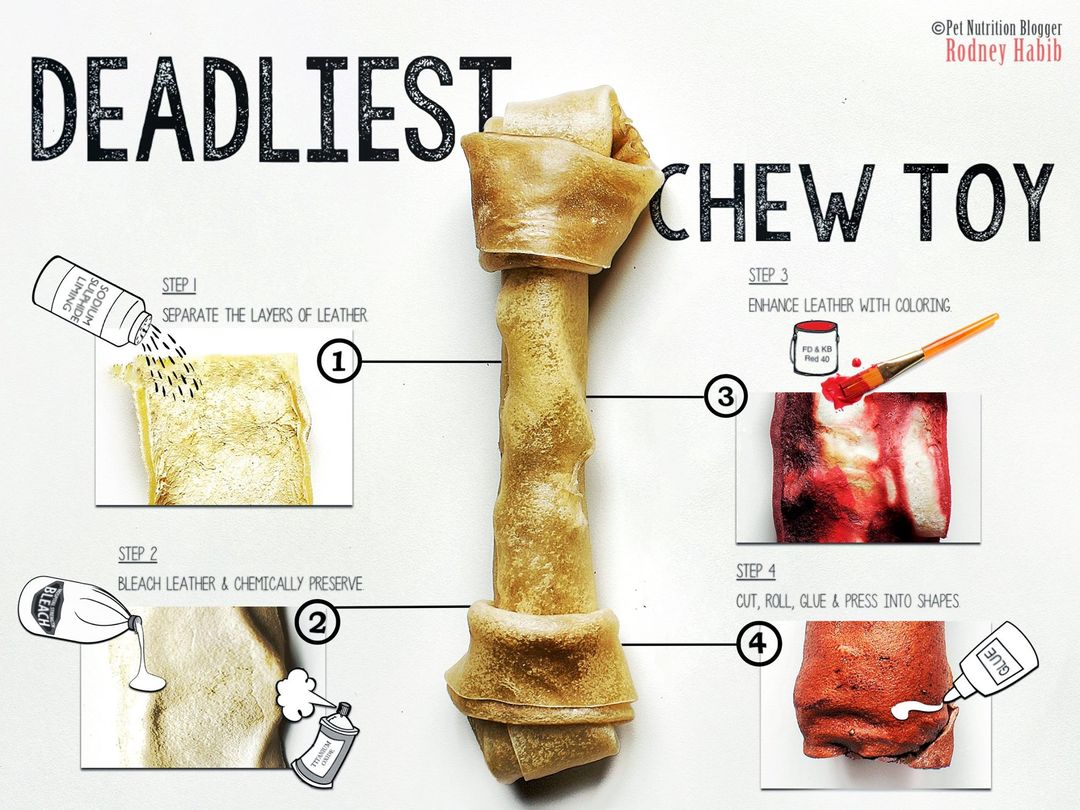
A rawhide stick is not the by-product of the beef industry nor is it made of dehydrated meat. Rather, rawhide is the by-product of the “Leather Industry”, so theoretically it is a leather chew. Sounds awesome, right?

So, how does this leather, which is conveniently rolled up into pretty shapes, actually get made into those rawhide chews?

STEP 1 (MOST DANGEROUS PET CHEW : RAWHIDE!)

: Normally, cattle hides are shipped from slaughterhouses to tanneries for processing. These hides are then treated with a chemical bath to help “preserve” the product during transport to help prevent spoilage.
(No one wants to purchase a black, spoiled rawhide stick!)

Once at the tannery: the hides are soaked and treated with either an ash-lye solution or a highly toxic recipe of sodium sulphide liming.

Next on this glorious journey, these hides are then treated with chemicals that help “puff” the hide, making it easier to split into layers.

The outer layer of the hide is used for goods like car seats, clothing, shoes, purses, etc. But, it’s the inner layer that is needed to make the rawhide. (Oh and other things like gelatin, cosmetics, and glue as well!)

STEP 2 (MOST DANGEROUS PET CHEW : RAWHIDE!)

Now that we have the inner layer of the hide, it’s time to go to the post-tannery stage! Hides are washed and whitened using a solution of hydrogen peroxide and/or bleach; this will also help remove the smell of the rotten or putrid leather. Bonus!
(Research also shows that other chemicals maybe used here to help the whitening process if the bleach isn’t strong enough.)

STEP 3 (MOST DANGEROUS PET CHEW : RAWHIDE!)

Now it’s time to make these whitened sheets of this “leathery by-product” look delicious! So, here is where the artistic painting process comes in.
“Basted, smoked, and decoratively tinted products might be any color (or odor) underneath the coating of (often artificial) dyes and flavors. They can even be painted with a coating of titanium oxide to make them appear white and pretty on the pet store shelves.” – whole-dog-journal.com

“…the Material Safety Data Sheet reveals a toxic confection containing the carcinogen FD&C Red 40, along with preservatives like sodium benzoate. But tracking the effects of chemical exposure is nearly impossible when it’s a matter of slow, low-dose poisoning.”– thebark.com

Ok, now that these hides have been painted, it’s time for the final process.

STEP 4(MOST DANGEROUS PET CHEW : RAWHIDE!)

Getting it to last forever!
Because the FDA does not consider these chews to be food, really it’s a free for all when it comes to the manufacturers of these leather strips, and the products they may want to add to these chews, to get them to last forever. Any sort of glue can be added here to get these bad boys to never come apart.
When tested: Lead, arsenic, mercury, chromium salts, formaldehyde, and other toxic chemicals have been detected in raw hides. So it’s safe to say that any sort of glues can be used as well!

Finally, it’s time to package and attach all the glorious marketing labels to the product.

Check out the fine print warning that’s attached with some of these rawhides:
“Choking or blockages. If your dog swallows large pieces of rawhide, the rawhide can get stuck in the esophagus or other parts of the digestive tract. Sometimes, abdominal surgery is needed to remove them from the stomach or intestines. If it isn’t resolved, a blockage can lead to death.“

(Oh, how lovely…)

And there it is! It’s now ready to be shipped to store shelves where it can be purchased for our loving animal companions.

P.S. Ready for the jaw dropper?

An investigation by Humane Society International stated in their report, “In a particularly grisly twist, the skins of brutally slaughtered dogs in Thailand are mixed with other bits of skin to produce rawhide chew toys for pet dogs. Manufacturers told investigators that these chew toys are regularly exported to and sold in U.S. stores.” – dogingtonpost.com

Filed Under: Uncategorised

Help your dog deal with fireworks

October 28, 2022 By

A few hints and tips to help your dog with fireworks.

There are many things we can do Help your dog deal with fireworks but you need time to prepare. If you’ve missed this opportunity follow these simple rules to try and keep them calm.

Feed and get toilet breaks done early

Give your dog enough time to finish their dinner, digest and toilet before the noise begins so that they’re not forced to hold it during an already stressful period.

Provide fun distractions to help your dog deal with fireworks

Entice them to focus on a toy, play, food, mental simulation toys during firework to keep their mind off the noise outside

Close the curtains or blinds

The noise for them is bad enough, try to minimise the stressful situation by closing out the bright explosive lights

Muffle the Noise

Unpredictable booming sounds can be perceived as an impending threat and make a dog feel vulnerable, plug in a white noise machine or turn on some calming music loud enough so that the fireworks are camouflaged

Safe Zone

If your dog’s “safe zone” is their crate, you can also cover the top, sides, and back with a thick blanket and play music or sounds. Ensure your dog can leave the crate if they wants to. If you don’t use a crate you should allow them to find a safe place in the house (they’ll choose where this is).

Comfort Your Dog

Comforting your dog in times of stress can reinforce his fears. However, your dog’s reactions to fireworks are based on a legitimate fear. Providing comfort during this time is appropriate and often very helpful. Doing this will help your dog understand that you’re his partner and that he can always turn to you when feeling scared.

There are others ways to prepare for these events which we’ll cover in a later blog.

Filed Under: Most read articles, Uncategorised Tagged With: fireworks

A well-trained dog is a happy, safe and healthy dog!

April 28, 2022 By

A well-trained dog

Dogs of all sizes generally have the same mindset. If a person is mindful of this, then there shouldn’t be any problems with training, no matter the type of dog they decide to get. Any pet owner who is oblivious to the way pets think can learn a great deal from this article.

Get your dog into a feeding routine. Feed your dog at the same time everyday and giving your dog fifteen minutes to eat will help your dog remember when it is time to eat. By doing this, your dog will eventually learn to finish their food in one sitting, making feeding a little easier on you.

Get your dog the proper nutrition required for canine health. If your dog isn’t getting what he needs from his diet, he will have a hard time concentrating during training. Not only is this bad for their health, but it can influence their behavior towards you and their environment. By simply improving the diet that the dog gets, you may notice a great improvement in how receptive they will be when it comes to training.

It is best to train your pet without unintentionally affirming his undesirable behaviors and mistakes. Essentially, you must not give your dog something positive, like attention or a treat, when it behaves in a way you want to classify as negative. For example, don’t rub your dog’s head when they jump up at you and when you come in the door if you don’t want them to jump.

Things to avoid

Avoid costly training tools such as shock collars. They may not work very well and are far too expensive. These devices can stifle your dog’s natural reactions and have negative effects on even good or acceptable behaviors. You will usually get negative results with these techniques.

Give your dog more freedom as he or she gets further along in the training program. Rewarding them by showing them you trust them more will only encourage better behavior. Avoid giving too much freedom early on, as this can easily counteract your training.

Whenever you want your dog to complete a task, you must reward it. You want them to know they did the right thing. Your dog will soon learn the difference between good and bad behavior.

The most successful training program is lifelong. Training does not stop when your dog leaves his puppy stage. If you always train your dog they will stay obedient and you will not encourage any new bad habits.

If you want to keep your dog trim and healthy, keep an eye on how many reward snacks you give him while training him. A lot of pet owners don’t think about how much weight their dogs can put on with treats.

As with most things, and this goes with dog training as well, don’t ever give up. Without reinforcement, your dog will revert to his old behaviors. Just as you need to keep feeding and sheltering your dog, training is a never-ending process.

With consistency, you can train your dog to hold on longer. When you start housebreaking a puppy, you will want to take it outside as often as possible. When the dog eliminates outside, offer it praise. Don’t yell at your dog for having an accident. Your dog doesn’t come out of the womb potty-trained, and it takes time to learn. Yelling or punishing is not helpful. Let the dog outside roughly 15 minutes following food or drink, and also each time he emerges from the crate.

Understanding how dogs think can make dog training easier. With this understanding, anyone can effectively train their dog. With the right information, one can now be a more effective trainer for their dog.

What next?

At Pawsitive Solutions, we specialise in helping you get the best possible relationship with your dog.

Why not enquire about our services using our enquiry page – Enquiries

Links

Back to Homepage
Our Facebook Page

Filed Under: Uncategorised Tagged With: dog training, training program

Useful tips for training your dog

April 21, 2022 By

Useful tips for training your dog

Training your dog can have many benefits. It can make your dog act better and help you become better at being a pet owner. The tips below can help you train your dog correctly. You will see that you have gained something from your investment of time and enjoyed yourself as well.

To strengthen your training efforts, you can use a designated verbal command to help your animal know what your expectations are and when they have been fulfilled. The word “yes” may serve as a good gap-filler in between the dog’s good behavior and the giving of the reward.

Consistency

In dog training, use the same volume and tone of voice when you state a command. This lets the dog know you are serious. It is important that your dog be able to distinguish between a command and a reprimand.

As you are working to house train your pet, select a single term or phrase that you will use. Use the same word or phrase each time you bring him out to go to the bathroom so that he understands what you want him to do and makes a memory link between the phrase and the act.

If your dog leaps on you, hold his paws and squeeze them a little so he will know this is not acceptable. This will not hurt him, but it is quite uncomfortable. Before long, they will stop their habit of jumping on people due to this association.

If you are thinking of hiring an animal specialist, be sure that you check their reputation and interview them thoroughly. Many of these professionals have different techniques that they will use to train a dog. You should know whether or not you agree with their methods before hiring them to train your pet!

Encouragement

Positively encourage your dog without using treats. Use treats to improve the behavior of dogs. However, it’s unlikely that you will carry treats around every single day for the rest of your dog’s life. Try patting your dog on the back and giving him an “enthusiastic, that a boy.”

If you plan to allow your pet to eliminate indoors, provide an area that is designated for that purpose. Line the area with potty pads and slowly shrink the size of the spot until just one potty pad designates the exact spot you have set aside for their use.

Your dog needs to be mentally stimulated just like a human does. Take your dog on a walk, give them toys and bones to keep them busy. If your dog is bored, it is more likely to get into mischief and display destructive behavior.

The most important part of dog training is to ensure that dog know its name. You dog needs to know his name well for you to have control over his behavior. Do this ten times per day. Avoid confusion by not calling your dog to you for punishment.

Chewing

Pet owners generally place chewing on top of their list of undesirable behaviors. Both your dog’s health and your personal property will benefit from avoiding chewing. Start by removing items he’d like to chew so he’s not tempted. There are also various bitter tasting sprays that you can use to keep dogs away from immovable objects like heavy furniture.

As you can see by now, there are many benefits to dog training. It can actually be fun to train a dog as well. Your relationship with your dog will only get stronger.

At Pawsitive Solutions, we specialise in helping you get the best possible relationship with your dog.

Why not enquire about our services using our enquiry page – https://pawsitivesolutions.com/enquiries/

Links

Back to Homepage
Our Facebook Page

Filed Under: Uncategorised Tagged With: dog needs, dog training

  • « Previous Page
  • 1
  • 2
  • 3
  • 4
  • 5
  • …
  • 46
  • Next Page »

Search

Training Programmes

  • One-to-One Behavioural Training
  • General Obedience Training
  • Puppy Package

Most read articles

  • How to choose the right puppy
  • How to help your dog handle Fireworks and Thunderstorms
  • How to handle a rescue dog
The Natural Dog Training Academy

I NEED HELP SOONER!

Still can’t find what you’re looking for and want to gain access to help on demand? Try our online courses for behaviour focused training with The Natural Dog Training Academy.

We have taken your most requested topics and produced a series of in depth online video courses, covering a range of dog behavioural issues most commonly experienced by owners.

We explore issues like:

  • Excessive barking
  • Excessive pulling
  • Recall
  • Puppy management and much more
  • Curious to see what’s on offer? Click on the link to find out more.

    Go to video courses!

    Recent Posts

    • Why Does My Dog Keep Licking Their Paws?
    • Enrichment Tips for a Bored Dog
    • Keeping Dogs Cool During a Heatwave
    • Why Your Dog Suddenly Started Barking At Night
    • Signs of an Overstimulated Dog

    Popular pages

    • Dog Training Glasgow
    • Dog Trainer Glasgow
    • Dog Training Falkirk
    • Join Our Team

    Contact

    Email: enquiries@pawsitivesolutions.com

    Copyright © 2024 Pawsitive Solutions · Powered by Digtial Footprints